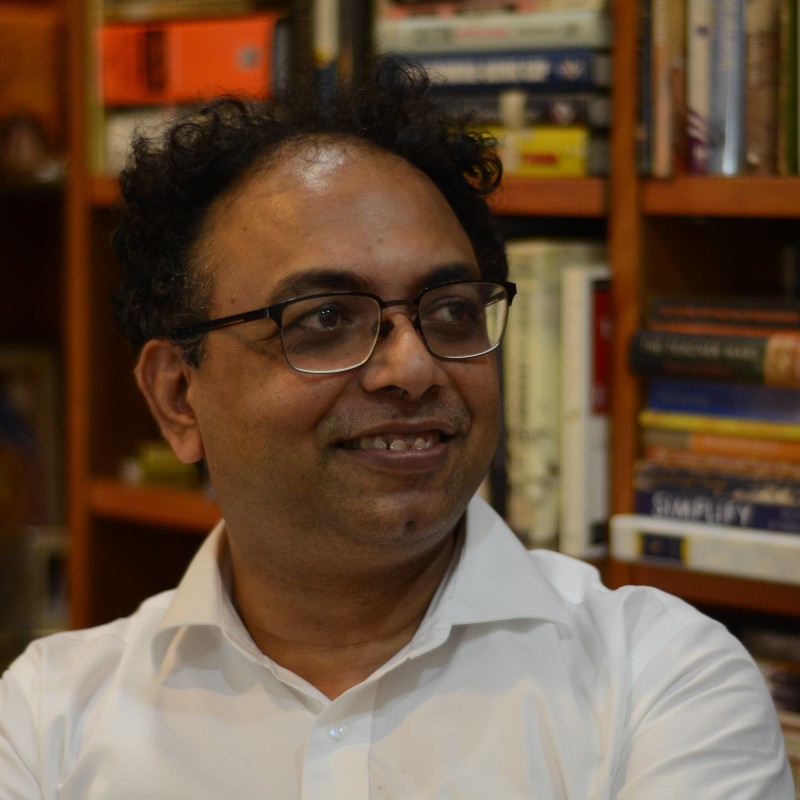
Srinivas Venkatram
Srinivas Venkatram works on how people and institutions can evolve consciously through knowledge in a post-knowledge society: a world where intelligence is abundant and knowledge can be shaped into products almost in real time.
In such a society, what will matter more is the human relationship with this “external intelligence” — how we engage with it, how we assimilate it, how we use it to amplify our roles, how we retain cognitive agency, how we differentiate ourselves from others who have access to the same knowledge and intelligence, and most important, how individuals and institutions evolve sustainably in a world that is radically uncertain.
These questions appear new and urgent in the AI age, but they have been growing in importance right from the 1990s when we encountered information abundance through the internet.
Srinivas recognized these questions early and has worked on them for 3 decades. His goal has not been restricted to developing theories, but also translating these theories into new models of education, business, work, careers, and personal evolution, in a variety of human contexts — schools, universities, communities, large corporations, small businesses, and government institutions.
He has also spent time thinking about how these models can be scaled so that humanity is better prepared to face a world where one of its core identities — homo sapiens (the species who is intelligent) is challenged.
Spaces of inquiry
Current thinking
- Sep 2026The Role of Knowledge in Human EvolutionExploring how knowledge drives human evolution—from instinct and tradition to purposeful action, self-transformation, and universal consciousness.Space of inquiry: Towards a Theory of Knowledge
- Aug 2026How to Build Cognitive AgencyWhat it takes for people to keep directing their own thinking as AI does more of it.Space of inquiry: Cognitive Enablement
- Jul 2026Towards a Theory of KnowledgeKnowledge that lives in a person’s dynamic engagement with the world, rather than in a store of content.Space of inquiry: Towards a Theory of Knowledge
- Jul 2026Rebuilding India – Alternative Perspectives of ChangeHow to integrate institutional and individual change: a new model of change called Human Systems Change.Space of inquiry: Institutions as Evolutionary Human Systems
- Jun 2026The Society that is EmergingSix emerging dimensions which point to a society that will be far more universal, human, and far less hierarchical than the present world.Space of inquiry: Institutions as Evolutionary Human Systems
- Jan 2026AI & Metacognitive ChangeHow to think about change in the age of AI.Space of inquiry: Cognitive Enablement
Featured talks
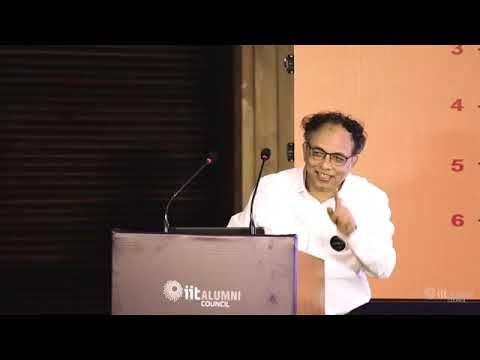
- Building Karmayogis for Viksit BharatWorld Wisdom Connect, New Delhi, 2026Mission Karmayogi is India’s national programme to change how its civil servants work. Since 2022, Illumine’s Karmayogi programmes have reached about two million government staff, including more than a million in a single year.
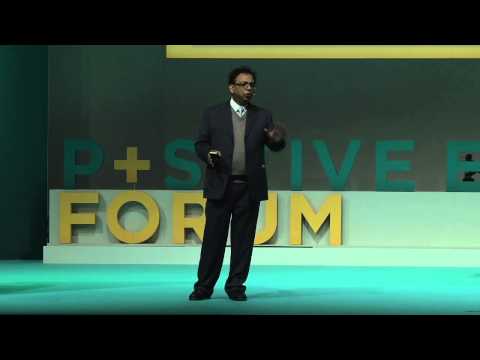
- Building Evolutionary Capacities for Future GenerationsPositive Economy Forum, San Patrignano, Italy, 2015The capacities young people need for a world whose rules keep changing.
Books
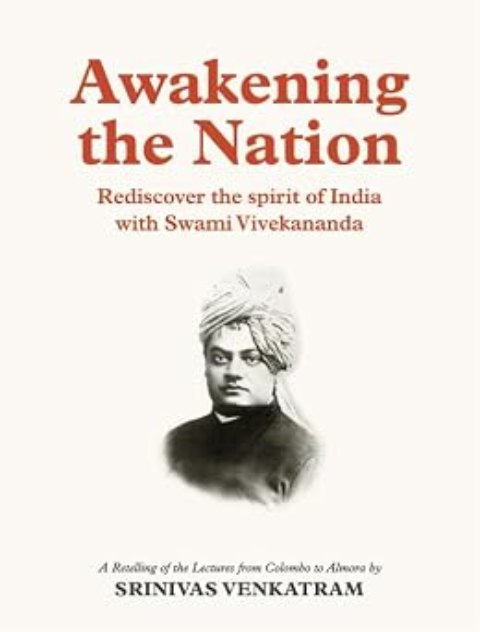
- Awakening the Nation:
Rediscover the Spirit of India with Swami VivekanandaIllumine Publications, 2025 - Cognitive Enablement:
How We Must Know in the Age of AIforthcoming
Also: The Contributor Ethic and Maps of Becoming (forthcoming), and a series of short books on Kindle.
All booksAbout Srinivas
For more than three decades Srinivas Venkatram has worked on how human beings engage with, and evolve through, knowledge. In the mid-1990s he set up Illumine in Mumbai, where foundational constructs such as Knowledge for Enablement, Assimilation and Contribution are turned into working models: programs, tools and knowledge platforms used with government, schools, universities and companies.
Illumine’s programmes have reached more than five million people. They include work with about two million government staff under Mission Karmayogi, India’s national civil-service programme; with companies such as State Bank of India, Tata Consultancy Services and Bharat Petroleum; and a school programme approved by India’s national school board and running in more than 5,700 schools. Srinivas has spoken to audiences in the UK, Italy, Luxembourg, Oman and Fiji, and has been interviewed on BBC Radio 4.